

-
Services
-
 Translation Services
Accurate and fast human-powered translations for global needs by top language experts to 80+ languages.
Translation Services
Accurate and fast human-powered translations for global needs by top language experts to 80+ languages. -
 Certified Translation
Certified translation for USCIS or other purposes done by translators certified by ATA, BDÜ, NAJIT.
Certified Translation
Certified translation for USCIS or other purposes done by translators certified by ATA, BDÜ, NAJIT. -
 Localization
Tailored localization solutions for the global expansion of your content into international markets.
Localization
Tailored localization solutions for the global expansion of your content into international markets. -
 Transcription Services
Our experts convert audio, video, or podcasts into text or subtitle, making your content accessible.
Transcription Services
Our experts convert audio, video, or podcasts into text or subtitle, making your content accessible. -
 MT Post-Editing
Expert post-editing services for machine-translated content that ensure fluency and excellence.
MT Post-Editing
Expert post-editing services for machine-translated content that ensure fluency and excellence. -
 DTP Service
Excellent combination of translation and DTP expertise perfectly fit for the materials intended for publication.
DTP Service
Excellent combination of translation and DTP expertise perfectly fit for the materials intended for publication. -
 E-learning translations
Elevate your e-learning content with expert translation services across diverse language audiences.
E-learning translations
Elevate your e-learning content with expert translation services across diverse language audiences. -
 Voice over
Bring your videos to life in any language with our professional voiceover translation services.
Voice over
Bring your videos to life in any language with our professional voiceover translation services.
-
- Languages
- Industries
- Business & Commerce
- Finance
- Marketing & Advertising
- Certificates, Diplomas, Licenses
- Legal
- E-learning translations
- IT & Software
- Technical
- Personal Content
- Manufacturing & Engineering
- Medicine
- Art & Literature
- Audio & Video Script
- Prices
- Blog
- About Us
- How it works
- Testimonials
- Immigration & Visa Certified Translation Use Cases
- Certified Translation Use Cases
- Document Translation Samples
- Certificate Samples
- Discounts
- Meet Our Expert Team
- FAQ
- Free Quote
- Contact Us


Employee Handbook and HR Document Translation for Global Workforces
Accurate, legally-aware translation of employee handbooks, HR policies, codes of conduct, employment contracts, and workplace documentation — for 80+ languages, any jurisdiction, with full NDA coverage. Serving HR, legal, and compliance teams at companies of all sizes.


HR Translation Service For International Companies Delivered Within 24 Hours
TheWordPoint delivers professional human translations of employee manuals, policies, and compliance guides through native-speaking experts and advanced machine translation post-editing technology, enabling clear communication with your global workforce.
Certified Employee Handbook Translation For Global Workforce
Companies with international teams are required to communicate workplace rules, benefits, disciplinary procedures, and safety policies in a way employees can legally rely on. That is where certified employee handbook translation plays a critical role for any business.
What Is Employee Handbook and Manual Translation?
Employee handbook and manual translation is the professional translation of company policies, codes of conduct, and HR documents, so employees can clearly understand their rights, responsibilities, and company standards.
The translation may be accompanied by a signed certificate of accuracy when required. Certification confirms that the translation faithfully reflects the original content. This is especially important when documents are used for legal, regulatory, or official purposes.
An employee manual is not just internal guidance. In many jurisdictions, it carries legal weight. If policies are unclear, mistranslated, or inconsistent in other languages, companies expose themselves to disputes, regulatory inspection, and employee mistrust. A professional HR document translation service ensures that policies remain enforceable, understandable, and aligned with local labor law expectations. Explore our Employee Handbook Translation Case Studies and learn how businesses overcome challenges in translation and localization of global HR documentation.
Solutions For HR Document Translation Service
Contact Account Manager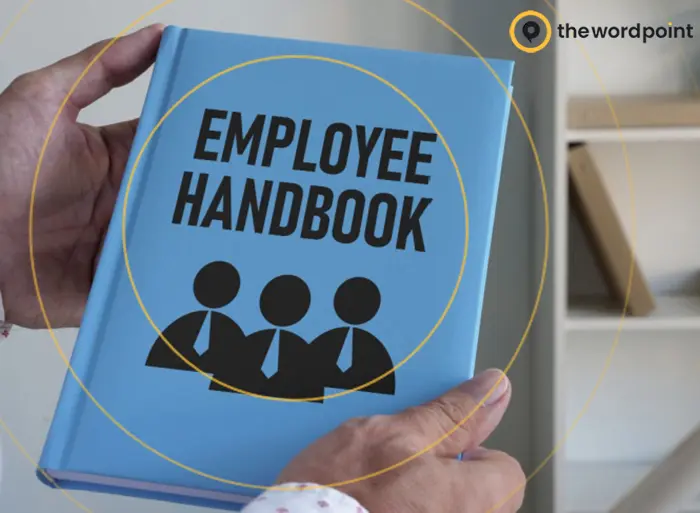

Why Employee Handbook Translation Requires Human Expertise
Employee handbooks and HR policies are not general business content. They are quasi-legal documents that:
- Define the employment relationship and the obligations of both employer and employee
- Must be enforceable in the jurisdiction where employees work
- Carry a specific legal meaning that varies significantly across countries
- Must be interpreted consistently by employees, HR teams, works councils, and courts
An employee handbook that is grammatically correct but legally imprecise in the target language can create serious employer exposure. A non-compete clause that is unenforceable under the target country's labor law — but that reads as enforceable in translation — creates false legal confidence. A disciplinary procedure that doesn't use the precise legal terminology required under the target jurisdiction's employment code may be challenged in tribunal proceedings.
TheWordPoint's HR document translators are not just native speakers — they are professionals with subject-matter expertise in HR terminology, labor law concepts, and the employment documentation standards of major jurisdictions. No machine translation is used at any stage.
TheWordPoint provides a whole range of translator services online, connecting businesses with skilled linguists who cover more than 80 languages, and we continue to expand our language portfolio on a regular basis to meet growing global demand. Spanish stands out as our strongest and most extensive category, as we maintain the largest team of certified, native-level experts specializing in Spanish translations (both Latin American and European Spanish variants), ensuring fast turnaround, cultural precision, and deep familiarity with regional differences in Mexico, Argentina, Colombia, Venezuela, and Spain.
Employee Manual Certified Translation Pricing
|
Language Pair |
Human Translation |
Machine Translation Post-editing |
|
English to Spanish/Spanish LatAm* |
$0.10 |
$0.07 |
|
English to French Canadian* |
$0.11 |
$0.08 |
|
English to German* |
$0.11 |
$0.08 |
|
English to Chinese* |
$0.11 |
$0.07 |
|
English to Korean |
$0.12 |
$0.08 |
|
English to Japanese |
$0.13 |
$0.09 |
|
English to Vietnamese |
$0.10 |
$0.07 |
|
English to Italian |
$0.12 |
$0.08 |
|
Spanish to English (US) |
$0.10 |
$0.07 |
|
French (Canadian) to English (US) |
$0.11 |
$0.08 |
Need fast and reliable HR document translation service? We are here 24/7 to help.
Request a Translation
 Reviews
Reviews
HR and Workplace Documents We Translate
For businesses operating internationally, HR compliance translation is about clarity and trust. Local employees must understand their rights and responsibilities. Management must be confident that translated documents reflect approved corporate standards. These materials often need to align with regional labor laws while remaining consistent with global company policy. This balance requires professional oversight in business translation services, not direct machine output.
- Employee handbooks and manuals. Full handbook translation for distribution to employees in any language. Consistent terminology throughout, jurisdiction-aware language, and format preservation in your original document layout.
- Codes of conduct. Anti-harassment, anti-discrimination, anti-bribery, data protection, whistleblower, and social media policies. These documents carry specific legal meaning in each jurisdiction and require translators who understand local enforcement norms.
- Employment contracts and offer letters. Employment agreements, secondment contracts, fixed-term contracts, independent contractor agreements, and offer letters for international hires.
- Benefits documentation. Health insurance guides, retirement and pension plan summaries, parental leave policies, PTO and vacation policies, and employee assistance program guides.
- Onboarding materials. New hire paperwork, orientation guides, safety induction materials, and first-day documentation packages.
- Termination and disciplinary documentation. Termination letters, severance agreements, performance improvement plans (PIPs), warning letters, and disciplinary procedure documentation.
- Mandatory notices — US context. FMLA (Family and Medical Leave Act) notices, ADA accommodation notices, COBRA continuation coverage notices, WARN Act notices, and state-equivalent required notices.
- Safety and compliance documentation. OSHA compliance materials, workplace safety policies, chemical safety (SDS), emergency procedure manuals, and international health and safety equivalents.
- Union and collective bargaining documentation. Collective bargaining agreements, union contract summaries, and employee rights notices in unionized environments.
- Global mobility documents. International assignment letters, secondment agreements, international benefits packages, host country employment contracts, and repatriation documentation.
Industries With the Most Critical Multilingual HR Needs
While all global employers need HR translation, these industries face the most acute legal and operational exposure from untranslated HR documentation:
- Construction and engineering. Construction workforces are among the most linguistically diverse in the US and globally. OSHA safety documentation, workplace safety policies, fall protection procedures, and hazard communication materials must reach every worker regardless of primary language. OSHA 10 and OSHA 30 training materials are increasingly required in Spanish and other languages.
- Healthcare. Clinical staff, nursing, and support personnel in healthcare are recruited internationally. Employment contracts, clinical protocol documentation, and mandatory licensing disclosures must be translated. Non-English-speaking clinical staff must have access to workplace safety and incident reporting procedures.
- Hospitality and food service. Front-of-house and back-of-house workforces in hospitality are often multilingual. HR policies, harassment prevention materials, and food safety documentation must be translated for effective compliance.
- Manufacturing and logistics. Assembly line, warehouse, and logistics operations employ large multilingual workforces. Safety procedures, shift policies, and disciplinary documentation need consistent multilingual availability.
- Technology — international hiring and global mobility. Tech companies recruiting internationally and relocating employees across countries need employment contracts, equity plan documentation, and HR policies adapted and translated for each hiring jurisdiction.
- Agriculture. US agricultural employers with H-2A seasonal worker programs are required by DOL regulations to provide job descriptions, work contracts, and disclosure statements in languages workers understand.
.png)
.png)
.png)

What Our Clients Say
.png)
2 reviews
"We ordered translation of our employee manuals into 5 languages while streamlining our work process. Well done!"
How Employee Handbook Translation Works at TheWordPoint
Confirm your compliance requirement. Determine whether your target jurisdiction mandates a specific language for employment documentation (France, Germany, Spain, Brazil, China, etc.), and whether you need certified translation for an official submission or professional translation for employee use.
Submit your documents. Share your handbook, policy, or HR documentation at thewordpoint.com/business-free-quote. Provide editable source files where possible — Word or Google Docs are preferred over PDF scans. Include any existing HR glossaries or prior translated materials.
HR-specialist translator assigned. Your project is matched to a translator with HR and labor law expertise and native fluency in the target language. For EU jurisdiction requirements, translators with knowledge of local employment law terminology are selected.
Translation with full terminology consistency. Your handbook is translated with consistent application of HR terminology throughout. Defined terms, policy names, and role titles are rendered consistently across every section — critical for documents where legal interpretation may depend on consistent language.
Review and jurisdiction-aware quality check. An independent reviewer checks accuracy, terminology consistency, and compliance with target-language employment documentation conventions before delivery.
Delivery and future update management. Delivered in your required format. Your translation memory is maintained, so future policy updates — annual revisions, policy amendments, additions — are translated at reduced cost with full consistency from the original project.
Quality Control of Employee Handbook Translation
Our service incorporates a multi-layered quality assurance process designed to deliver consistently reliable and polished results to our clients. Every translation or localization project begins with an assignment to a dedicated specialist, always an experienced professional with many years of hands-on expertise in the relevant field (HR, legal, technical, or business content) and native-level fluency in both the source and target languages. For example, if you order a Spanish localization of an employee handbook, we assign a qualified native Spanish translator (or team) who delivers the localized version. Once the work is submitted, we analyze their input, make any necessary refinements, and incorporate the insights into our ongoing process. This real-user validation helps us maintain market-leading quality and stay ahead of regional linguistic and cultural nuances.
TheWordPoint Helps Businesses Communicate Clearly Through Expert HR Compliance Translation
If you’re looking for expert certified translation of your employee manuals, we’d love to become your go-to partner for labor law and HR document translations. From handbooks and policies to immigration forms, financial documents, CV translation services, contract translations, and beyond, whatever corporate HR translation you need, we’re here to deliver it accurately and professionally.
Certified Translation vs Professional Translation for HR Documents — Which Do You Need?
This is the most important decision before ordering, and the answer depends on how the translated document will be used:
Professional translation is appropriate for:
- Distributing an employee handbook or policy to non-English-speaking employees for their understanding and use
- Translating HR policies for international offices
- Providing documentation for European works council consultation processes
- Translating onboarding materials, benefits guides, and training content
- HR communications to a multilingual workforce
Certified translation (with signed certificate of accuracy) is required for:
- Employment contracts or HR documentation submitted to a government agency (USCIS, DOL, NLRB, EEOC)
- HR documents filed as evidence in an employment lawsuit or labor tribunal
- Work visa petition supporting documentation including employment verification letters and job descriptions
TheWordPoint provides both. Most employee handbook orders are professional translation. If you need a certified translation for a regulatory submission, specify this when requesting your quote, and we will apply the appropriate certification format.
Benefits of Professional Employee Manual certified Translation
- Improving communication within the company. By providing a translation of the handbook, employers ensure that all employees, regardless of the language they speak, can effectively engage with the material.
- Increasing productivity. When employees fully understand company policies, they can perform their duties more efficiently.
- Implementing inclusivity. Offering handbooks in employees’ native language encourages a more inclusive workplace environment.
- Legal protection. Accurate translation helps employers meet compliance requirements and avoid potential legal disputes.
Supporting Employee Handbook Translation for Global Teams
Global organizations often rely on certified translation to maintain the integrity of their HR documents. Whether it's onboarding new hires, managing employee relations, or establishing compliance, a certified translation proves that the content is legally sound and universally understood.
Our focus on quality is evident in every step of the process. We understand that even minor errors in a translated handbook can have significant consequences. That’s why our team consists of only the most qualified translators, project managers, and quality control experts. With a dedication to bridging language barriers and helping employees understand business policies, we take pride in being a trusted partner for HR professionals and businesses worldwide.
Expanding beyond the Employee Handbook Translation Service. HR Manuals Translation for International Companies
In addition to employee handbook translation services, we also offer translation for other HR documents such as technical manuals, Human Resources policies, medical leaves, and legal contracts for understanding the operational aspects of employee roles and providing precise translations for employment agreements. Explore our Employment Relocation Use Case and learn how professional translation services help the HR industry. Whether you need a handbook to translate for onboarding new employees or updating company policies for international teams, TheWordPoint is here to assist.
Meet Our Customers










Key Features of Employee Handbook Translation Services
We focus on accuracy, compliance, and consistency, since these documents directly affect employees and expose businesses to legal risk, and a core feature is human translation for HR documents with legal experience.
Another key feature is compliance-focused translation. Professional employee handbook translation services ensure that policies, procedures, and disclaimers are translated clearly and completely, without altering meaning or creating contradictions that could conflict with local labor expectations.
Terminology consistency is also essential for corporate HR document translation. Employee handbooks often reuse the same terms across multiple sections. A professional translation service applies controlled terminology and translation memory to keep wording consistent in policies, manuals, and updates.
TheWordPoint also provides format-preserving translation. Headings, numbering, tables, and references are kept intact so the translated handbook mirrors the original document and remains easy for employees and HR teams to use.
Finally, strong employee handbook translation services support ongoing updates. As policies change, the same linguistic team and language assets can be reused, making future revisions faster, more consistent, and more cost-effective for businesses.
Challenges in Translating Employee Handbooks and in Corporate HR Document Translation
While translating an employee handbook might seem straightforward, it comes with unique challenges:
- Human resources documents often contain industry-specific terminology or technical jargon that requires a deep understanding of the context to ensure proper translation.
- Translating policies related to workplace behavior or discrimination requires careful adaptation to align with the cultural sensitivity and cultural norms of the target audience.
- Translation versions should comply with local labor laws is critical to avoid legal complications.
Country-by-Country HR Language Requirements — What the Law Requires
Many companies translate HR documents not as a preference, but because local law requires it. Here are the key requirements your legal and HR teams need to know:
France — Loi Toubon (Law No. 94-665). Employment contracts and workplace documents for employees working in France must be in French. If a document is in English or another foreign language, the employee may demand a French version and the employer is legally required to provide one. Non-French documents may be unenforceable if challenged. This applies to all employment contracts, HR policies, job offers, and any document an employee is required to sign.
Germany — Works Constitution Act (Betriebsverfassungsgesetz — BetrVG). Companies with 5+ employees and an elected works council must conduct information and consultation processes in German. HR documentation presented to the works council — reorganization plans, operational changes, works agreements, and policy changes — must be in German. Works councils may refuse to engage with English-language documentation, blocking the consultation process required before implementing organizational changes.
Spain — Employment legislation and regional language laws. Employment contracts must be in Spanish for Spain-based employees. Companies operating in Catalonia, the Basque Country, or Galicia may additionally face requirements to provide documentation in the regional language (Catalan, Basque, or Galician). Failure to comply can affect the enforceability of employment terms.
Belgium — Regional language legislation. Belgium has strict regional language laws for employment: Dutch in Flanders, French in Wallonia, and either in Brussels. Non-compliant employment documents may be legally void in the relevant region.
Italy — Codice Civile. Employment contracts for Italy-based employees must be in Italian. Foreign-language contracts may be unenforceable if challenged by an employee before Italian courts.
Brazil — Consolidação das Leis do Trabalho (CLT). Employment documentation for Brazil-based employees must be in Portuguese. Brazilian courts routinely rule against employers on documentation that employees could not read in their language.
China — Labor Contract Law. Employment contracts with China-based employees must be in Chinese (Mandarin). Foreign-language contracts are typically not enforceable in Chinese courts.
United States — EEOC guidance and state-level obligations. While there is no universal federal mandate to translate employment documentation, EEOC guidance strongly encourages providing workplace policies in languages employees can understand. California's WARN Act mandates mass layoff notices in employees' primary languages. New York and California have specific notice requirements in translation for certain employment documentation. Failure to provide understandable policies creates exposure in EEOC complaints and employment litigation.
Reviewed and updated on July 18, 2026, by
Christakis Christodoulou,
Managing Director
Head of the Certified Translation Department
FAQ
Can translated employee manuals be reused across countries?
Only if labor law language applies equally. Many sections require local adaptation.
How Do You Guarantee the Confidentiality of Sensitive Information?
At TheWordPoint, we prioritize the confidentiality of your sensitive information. We achieve this through strict security measures, protocols, and a commitment to professional ethics.
- Secure systems: All files are transmitted and stored on encrypted servers to prevent unauthorized access. We use secure file-sharing platforms, following best practices for data protection.
- Non-disclosure agreements (NDAs): Our team members, including translators and project managers, are bound by non-disclosure agreements that ensure they treat your information with the utmost care and professionalism.
- Certified professionals: We work exclusively with certified and vetted linguists who understand the importance of maintaining confidentiality in every project.
- Restricted access: Access to confidential documents is limited to team members directly involved in your project. No third party will be granted access without your authorization.
- Compliance Standards: We comply with global data protection regulations such as GDPR, ensuring legal and ethical standards are met.
By combining advanced technology with rigorous processes, we ensure that your sensitive information remains secure. Trust us to handle your projects with care and confidentiality.
How much does employee handbook translation cost?
We offer handbook translation services at affordable, word-based prices. Our rates for human translation include:
- English to Spanish: $0.08 per word
- English to French Canadian: $0.09 per word
- English to German: $0.10 per word
- English to Chinese: $0.10 per word
- English to Japanese: $0.11 per word
For faster turnaround, we also offer MTPE (Machine Translation Post-editing) at reduced rates starting from $0.07 per word. The final cost is influenced by the target language(s), project urgency, and overall scope. Contact our Account Department for top-quality translation solutions at competitive rates.
Do you provide certified employee handbook translation?
Yes, all of our specialists go through a rigorous certification process before being assigned to any project. If your project requires a translator with a special certification, we can accommodate your request. For example, we can provide translations certified by specialists accredited by ATA or ATIO. We can also provide a TWP Translation Accuracy Certificate for each translation performed by our company.
Why choose human translation over machine translation for employee handbooks?
Human translation services are vital for employee manuals because they ensure smooth comprehension of documents by the target audience. Unlike AI or Machine Translations, our services involve qualified translators with expertise in Human Resources terminology, legal compliance, and cultural nuances. Professional translators are trained to handle the complexities of handbook translation, ensuring your company handbook is both linguistically accurate and culturally appropriate. We approach all corporate Human Resources processes extremely thoroughly, selecting only the best experts who pass language and localization tests.
Do employee handbooks need certified translation?
In many cases, yes. When handbooks are used for compliance, onboarding, or legal reference, certified translation ensures the content is treated as reliable and complete.Professional translation (accurate, HR-specialized, with NDA) is appropriate for employee use. Certified translation (signed accuracy certificate) is needed for submissions to government agencies, courts, or regulatory bodies.
Do you offer MTPE for employee handbooks?
Yes. We offer MTPE (Machine Translation Post-editing) as a cost-effective and faster alternative to traditional human translation. Our MTPE services start from $0.07 per word, depending on the language pair. This service combines machine translation efficiency with human translation expertise - professional editors review and refine machine-generated content to ensure accuracy, cultural appropriateness, and proper HR terminology. MTPE is ideal for large handbooks or when you need faster turnaround without compromising quality.
Do I legally need to translate my employee handbook?
In France, Germany, Spain, Belgium, Italy, Brazil, China, and many other countries, yes — employment documentation must be in the local language or the employee's rights under those documents may not be enforceable. In the US, EEOC guidance strongly encourages translation for workforces with significant LEP populations.
Can you handle annual handbook update translations?
Yes. We maintain your translation memory so updates and amendments are translated faster and at lower cost, with full terminology consistency from the original project.
Can’t find an answer to your questions? Feel free to check our complete FAQ page, or contact us at
Are you ready to start?
Translate Now
Our Support is available round the clock to make sure that the working process is smooth and comfortable.