

-
Services
-
 Translation Services
Accurate and fast human-powered translations for global needs by top language experts to 80+ languages.
Translation Services
Accurate and fast human-powered translations for global needs by top language experts to 80+ languages. -
 Certified Translation
Certified translation for USCIS or other purposes done by translators certified by ATA, BDÜ, NAJIT.
Certified Translation
Certified translation for USCIS or other purposes done by translators certified by ATA, BDÜ, NAJIT. -
 Localization
Tailored localization solutions for the global expansion of your content into international markets.
Localization
Tailored localization solutions for the global expansion of your content into international markets. -
 Transcription Services
Our experts convert audio, video, or podcasts into text or subtitle, making your content accessible.
Transcription Services
Our experts convert audio, video, or podcasts into text or subtitle, making your content accessible. -
 MT Post-Editing
Expert post-editing services for machine-translated content that ensure fluency and excellence.
MT Post-Editing
Expert post-editing services for machine-translated content that ensure fluency and excellence. -
 DTP Service
Excellent combination of translation and DTP expertise perfectly fit for the materials intended for publication.
DTP Service
Excellent combination of translation and DTP expertise perfectly fit for the materials intended for publication. -
 E-learning translations
Elevate your e-learning content with expert translation services across diverse language audiences.
E-learning translations
Elevate your e-learning content with expert translation services across diverse language audiences. -
 Voice over
Bring your videos to life in any language with our professional voiceover translation services.
Voice over
Bring your videos to life in any language with our professional voiceover translation services.
-
- Languages
- Industries
- Business & Commerce
- Finance
- Marketing & Advertising
- Certificates, Diplomas, Licenses
- Legal
- E-learning translations
- IT & Software
- Technical
- Personal Content
- Manufacturing & Engineering
- Medicine
- Art & Literature
- Audio & Video Script
- Prices
- Blog
- About Us
- How it works
- Testimonials
- Immigration & Visa Certified Translation Use Cases
- Certified Translation Use Cases
- Document Translation Samples
- Certificate Samples
- Discounts
- Meet Our Expert Team
- FAQ
- Free Quote
- Contact Us


SDS and MSDS Translation Services
Professional translation of Safety Data Sheets, MSDS, chemical labels, package inserts, and IPIs.


Technical Accuracy in SDS Translation Services
We help businesses by delivering certified technical translations of safety data sheets, completed by professional translators with relevant subject matter expertise.
What Is an SDS — and Why General Translation Is Not Enough
A Safety Data Sheet (SDS) is a standardized document providing information about a chemical substance or mixture: its hazards, safe handling and storage, emergency response procedures, exposure limits, and regulatory status. The SDS format is mandated by the Globally Harmonized System of Classification and Labelling of Chemicals (GHS), developed by the United Nations and adopted by most countries through national legislation.
SDS translation is not general document translation. It requires three capabilities that go beyond language proficiency:
- Chemical and EHS subject-matter expertise. A translator must understand what a flash point is, how to read a NFPA 704 rating, what PPE abbreviations mean, how exposure limits (OEL, PEL, TLV, STEL) differ in context, and what the regulatory significance of each GHS hazard classification is. Errors in these fields are not linguistic — they are safety errors.
- Official H-statement and P-statement formulations. GHS hazard statements (H-statements, H200–H420 series) and precautionary statements (P-statements, P201–P501 series) have official adopted translations in every language. A compliant translation substitutes the official ECHA-published target-language formulation — it does not translate the English text. A "translated" H-statement that doesn't match the official formulation produces a non-compliant SDS.
- Regulatory framework knowledge. The target language is not enough — the translator must understand which version of GHS applies in the target market (OSHA HazCom for the US, REACH/CLP for Europe, WHMIS 2015 for Canada) and which jurisdiction-specific regulatory information must appear in Section 15.
TheWordPoint's SDS translators hold EHS, chemistry, chemical engineering, or pharmaceutical credentials alongside professional translation certification.
Get a Free Quote or Learn About Solutions for Your SDSTranslation Project
Contact Account Manager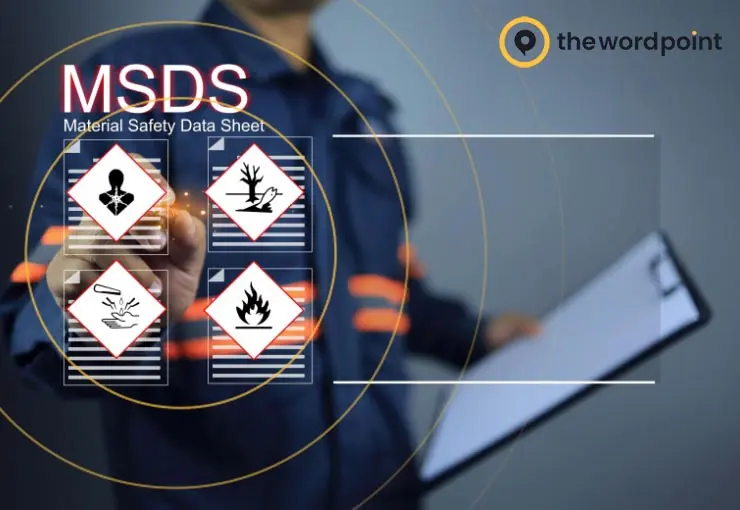

Safety Data Sheets Translation In Compliance with Local Regulations
Different world regions enforce unique regulations for handling chemical safety documentation. As a professional service provider, TheWordPoint ensures accurate technical translations for both English and non-English-speaking markets.
In the US, OSHA mandates that all MSDS documents comply with its 29 CFR 1910.1200 standard, while ANSI oversees proper labeling requirements. For the British market, REACH regulations present an entirely separate set of compliance demands.
Canada, being largely bilingual, requires translations of MSDS documents in both English and French. TheWordPoint’s services fully adhere to WHMIS standards, ensuring compliance and smooth market entry.
For global reach, the Globally Harmonized System of Classification and Labeling of Chemicals (GHS) is essential, impacting regulations in the US, Canada, and Europe. Additionally, Europe enforces the 2001/58/EC directive for manufacturers. In China, compliance with GB 16483-2000 rules is required, while Japan adheres to the JIS 27250 standard.
TheWordPoint doesn't just translate your material safety data sheets — we ensure full compliance with the regulatory frameworks of your target markets. Whether it's the US, Europe, or Asia, simply tell us the region-specific directives to follow, and we’ll handle the employee handbook translation with precision and care.
.png)

.png)
What Our Clients Say
.png)
2 reviews
"I've used TheWordPoint for a number of translation projects for a legal information website and always been very happy with them. They are easy to work with and do an excellent job."
What Makes Our Material Safety Data Sheet Translation Stand Out
TheWordPoint is dedicated to meeting the diverse needs of its clients. We provide certified translation service through top industry experts, carefully selecting professionals based on their specialization and experience. For MSDS translation, we exclusively assign translators from the chemical and related sectors, ensuring the highest level of subject matter accuracy.
Accurate Translation in 80+ Languages
Our translation services cover 80+ languages, meaning our linguists can help you reach different markets with accurate SDS documents. Whether you need assistance with English, French, German, Chinese, or any other major language, our team of specialized language experts is ready to get started right away.
Complete Security and Confidentiality in the Translation Process
We prioritize the protection of our clients, their personal documents, sensitive data, and identities. All files submitted for MSDS translation are handled with strict confidentiality, in full compliance with our data protection and privacy policies.
Competitive Pricing from Professional Translators
Our technical translation services are competitively priced, aligned with market standards — ensuring we attract top language specialists while keeping our services accessible and affordable. For example, the starting rate for chemical or SDS translation projects from English to Spanish is just $0.08 per word. Use our price calculation tool to get an instant estimate for your project.
Human Translation with Technical Expertise
As a certified translation company, we combine proven methodology with deep technical knowledge to deliver high-quality results. All MSDS translations are handled exclusively by human expert translators, ensuring accuracy, consistency, and meticulous attention to detail.
For technical localization projects, we use specialized glossaries to streamline the process and maintain terminology consistency. If your document contains 1,000 words but 300 are repeated phrases, you will only be charged for 700 unique words — enabling faster turnaround times and reduced costs.
Glossary Tools and Translation Memory
To maintain consistency and efficiency across all projects, our professional translators leverage translation memory tools that store previously translated terms, ensuring uniformity across multiple MSDS documents. Our use of the latest glossary tools ensures terminology consistency and helps reduce costs — particularly valuable for MSDS files, which typically contain a high volume of repetitive phrases and standardized terminology.
Certified translation of SDS, MSDS, Product Labels and Other Chemical Safety and Regulatory Documents
Request a Translation
 Reviews
Reviews
Chemical Safety and Regulatory Documents We Translate
- Safety Data Sheets (SDS) — GHS 16-section format. For all hazardous chemicals, all industry sectors, all jurisdictions. From or into any language with GHS implementation.
- Material Safety Data Sheets (MSDS) — legacy format. Older MSDS documents converted to GHS 16-section format where required, or translated within the original structure for jurisdictions still using legacy formats.
- GHS Chemical Labels. Product identifier, hazard pictograms, signal word, H-statements, P-statements, and supplier information — translated and formatted for print-ready output in the target language. Official H/P statement formulations applied.
- Pharmaceutical Package Inserts (PIL / IPI / SmPC). Patient Information Leaflets (PILs), Information for Patients Inserts (IPIs), and Summary of Product Characteristics (SmPC) for pharmaceutical products. These are regulated separately from SDS by pharmaceutical authorities (EMA, FDA) and require pharmaceutical-specialist translators.
- REACH Dossiers and Regulatory Submissions. Technical documentation for ECHA registration submissions, chemical assessment reports, and REACH compliance documentation.
- Transport Documents — DGD and TDG. Dangerous Goods Documentation for international chemical shipment: DGD (Dangerous Goods Declaration), IMO/IMDG documentation, ADR documentation (road transport of dangerous goods in Europe), and IATA DGR documentation for air transport of dangerous goods.
- Chemical Product Labels (Non-GHS). Product labels not subject to GHS (consumer products, pesticides, biocides) translated for market entry in any target country.
Industries We Serve for SDS Translation
Chemical manufacturing and distribution. Chemical manufacturers and distributors require SDS translation for every product in their portfolio in every language market where the product is sold or used. This creates the largest and most consistent SDS translation demand — often hundreds or thousands of SDS per product library.
Import and export compliance. Chemical importers bringing products into the US must provide English-language SDS under HazCom 2012. Exporters sending chemicals to the EU must provide SDS in the official language of each target member state.
Pharmaceutical and life sciences. Pharmaceutical companies require SDS translation for chemical raw materials and APIs (active pharmaceutical ingredients) used in manufacturing. Package inserts (PILs/IPIs) are a parallel but separate requirement for pharmaceutical translation.
Cosmetics and personal care. Cosmetics manufacturers must provide SDS for cosmetic products classified as hazardous (professional-use products, concentrated formulations) in compliance with EU Cosmetics Regulation and equivalent frameworks.
Agricultural chemicals and pesticides. Pesticide and agrochemical manufacturers require SDS translation for active ingredients and formulations, plus separate label translation for product labels subject to pesticide registration requirements.
Manufacturing and industrial operations. Manufacturers handling hazardous materials (paints, solvents, lubricants, adhesives, cleaning products) in multi-language work environments require worker-language SDS under OSHA HazCom (US) and equivalent requirements for industrial translation.
Oil and gas. Upstream and downstream oil and gas operations use large numbers of chemical products requiring SDS in multiple languages for international operations.
How Our SDS Translation Process Works
Identify your regulatory requirement. Which framework applies: OSHA HazCom 2012 (US), REACH/CLP (EU — which member states?), WHMIS 2015 (Canada), or another national GHS implementation? This determines target language(s), H-statement formulation source, and Section 15 content requirements.
Submit your SDS. Upload your SDS document at thewordpoint.com/business-free-quote. Provide the source language, target language(s), intended market, and any product CAS numbers or identifiers for terminology verification. Batch orders of 5+ SDS receive project-level management.
EHS-specialist translator assigned. Your SDS is assigned to a translator with chemistry, chemical engineering, or EHS subject-matter expertise and native fluency in the target language. All SDS translators are specifically vetted for knowledge of GHS H-statement and P-statement regulatory formulations.
All 16 sections translated with official regulatory language. Every section is translated. H-statements and P-statements are matched to their official ECHA-published target-language formulations — not freely translated. Chemical terminology is verified for accuracy. Section 15 is adapted for the target jurisdiction's regulatory framework.
Regulatory compliance review. A second specialist reviews the completed translation: H-statement codes verified, P-statement formulations confirmed, section completeness checked, terminology audited for chemical accuracy. This second review is mandatory for SDS — not optional.
Delivery and SDS library management. Translated SDS delivered in Word, PDF, or original format. For ongoing SDS library management, we maintain a client-specific chemical terminology database and translation memory, ensuring consistency across all products and enabling faster, lower-cost updates when SDS are revised.
Languages We Translate SDS
See all languages
Money-Back Guarantee
Reviewed and updated on July 18, 2026, by
Christakis Christodoulou,
Managing Director
Head of the Certified Translation Department
FAQ
Do You Have Experience With Chemical Terminology?
Yes, our translators specialize in chemical and hazardous materials documentation. They understand GHS standards, chemical nomenclature, and industry-specific terminology. Each translator has background in chemical safety documentation.
How long does SDS translation take?
The standard turnaround for SDS translation is 3-4 business days. For urgent needs, we offer expedited service within 24-48 hours. Timing depends on document length and language pair.
Can You Handle Regular Updates to Our SDSs?
Yes, we maintain translation memories and terminology databases for each client. This ensures consistency across updates and reduces costs for revised documents. We track version controls and update all language versions simultaneously.
What is an SDS and why does it need translation?
A Safety Data Sheet (SDS) is a GHS-mandated chemical safety document. It must be in the official language of every country where the chemical is sold or used. OSHA HazCom 2012 requires English SDS in the US; REACH/CLP requires the official language of each EU member state; WHMIS 2015 requires English and French in Canada.
Does OSHA require SDS to be translated?
Importers must provide English SDS under HazCom 2012 before distributing chemicals in the US. Employers may be required to provide worker-language SDS for LEP workers.
Does REACH require SDS in every EU language?
Yes. REACH/CLP requires SDS in the official language of each EU member state where the product is marketed. 24 official EU languages may be required for pan-EU distribution.
Can AI translate SDS reliably?
No. SDS translation requires official H/P statement formulations from regulatory databases, not free translation. AI tools translate text — they cannot look up and apply official ECHA formulations. Errors in SDS have direct safety consequences.
Do you translate chemical labels?
Yes. GHS chemical labels require the same H/P statement formulations as SDS. We translate labels and can deliver print-ready formatted output.
Do you translate pharmaceutical package inserts (PILs/IPIs)
Yes. PILs and IPIs are separate from SDS and governed by pharmaceutical authority requirements (EMA, FDA). We assign pharmaceutical-specialist translators.
Can’t find an answer to your questions? Feel free to check our complete FAQ page, or contact us at [email protected]
Are you ready to start?
Translate Now
Our Support is available round the clock to make sure that the working process is smooth and comfortable.