

-
Services
-
 Translation Services
Accurate and fast human-powered translations for global needs by top language experts to 80+ languages.
Translation Services
Accurate and fast human-powered translations for global needs by top language experts to 80+ languages. -
 Certified Translation
Certified translation for USCIS or other purposes done by translators certified by ATA, BDÜ, NAJIT.
Certified Translation
Certified translation for USCIS or other purposes done by translators certified by ATA, BDÜ, NAJIT. -
 Localization
Tailored localization solutions for the global expansion of your content into international markets.
Localization
Tailored localization solutions for the global expansion of your content into international markets. -
 Transcription Services
Our experts convert audio, video, or podcasts into text or subtitle, making your content accessible.
Transcription Services
Our experts convert audio, video, or podcasts into text or subtitle, making your content accessible. -
 MT Post-Editing
Expert post-editing services for machine-translated content that ensure fluency and excellence.
MT Post-Editing
Expert post-editing services for machine-translated content that ensure fluency and excellence. -
 DTP Service
Excellent combination of translation and DTP expertise perfectly fit for the materials intended for publication.
DTP Service
Excellent combination of translation and DTP expertise perfectly fit for the materials intended for publication. -
 E-learning translations
Elevate your e-learning content with expert translation services across diverse language audiences.
E-learning translations
Elevate your e-learning content with expert translation services across diverse language audiences. -
 Voice over
Bring your videos to life in any language with our professional voiceover translation services.
Voice over
Bring your videos to life in any language with our professional voiceover translation services.
-
- Languages
- Industries
- Business & Commerce
- Finance
- Marketing & Advertising
- Certificates, Diplomas, Licenses
- Legal
- IT & Software
- Technical
- Personal Content
- Manufacturing & Engineering
- Medicine
- Art & Literature
- Audio & Video Script
- Prices
- Blog
- About Us
- How it works
- Testimonials
- Immigration & Visa Certified Translation Use Cases
- Certified Translation Use Cases
- Document Translation Samples
- Certificate Samples
- Discounts
- Meet Our Expert Team
- FAQ
- Free Quote
- Contact Us


E-Learning Translation and Localization Services for Courses, SCORM and LMS
Human translation and localization of online courses, SCORM packages, compliance training, quizzes and LMS content, in 80+ languages.


Professional localization solutions for e-learning translation needs
We are helping businesses develop eLearning programs and training courses by offering expert human e-learning translation in many languages provided by native speakers, certified professionals, and cutting-edge technology.
Home > Services > Translation Services > E-Learning Translation >
E-Training Translation Services for Business
One of the most important things for businesses, especially organizations operating on a global scale is having access to the right and accurate teaching/training strategies and resources at online education market.
As companies start setting up in non-native regions around the world, it is vital for them to streamline their employee elearning content or etraining programs with accurate translations and localization. At TheWordPoint, this is exactly what we do. An elearning translation typically involves the translation of textual, audio, or visual content, as well as software localization or other interactive elements.
We offer top-level etraining translation services, transforming your global training materials, and providing you with precision-based translation of elearning content from any source language in multiple languages. Working with subject matter experts in localization and translation, we have a wealth of cutting-edge technical resources to translate your etraining content in line with your industry and its nuances while keeping the content highly engaging. Evidently, elearning translation and website localization can be valuable for elearning companies looking to access new markets.
The Best Solution for Your E-learning Translation Project
Contact Account Manager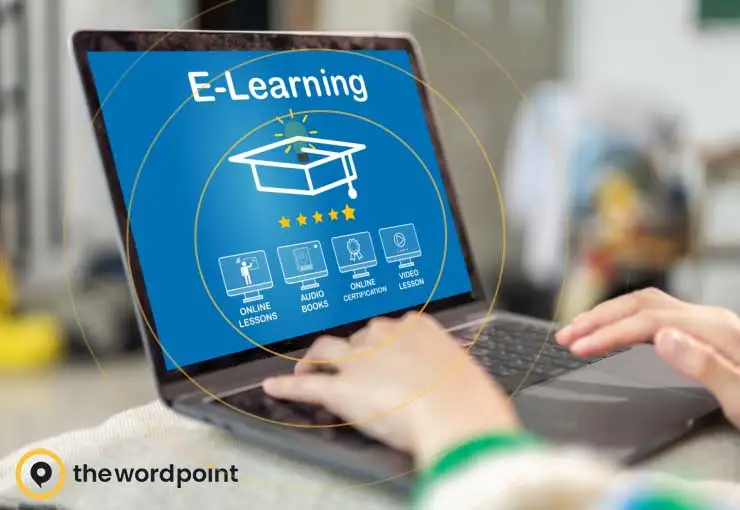

SCORM, xAPI and XLIFF: How E-Learning Courses Are Translated
E-learning translation differs from document translation in one critical way: the content sits inside a technical package, not a standalone file. Translating it correctly keeps interactivity, LMS tracking and course functionality intact.
SCORM. SCORM 1.2 and SCORM 2004 are the most widely used packaging standards for e-learning content. A SCORM package is a .zip archive of HTML, JavaScript and XML files. Its API connects the course to the LMS to track completion, quiz scores, time spent and bookmarks. When we translate SCORM content:
- We work from the source authoring file (.story for Articulate Storyline, .cptx for Adobe Captivate) whenever possible, so interactivity, branching and design are preserved.
- If only the published package is available, we extract the text from its HTML and XML files, translate it and repackage it.
- After translation, we test the package in the target LMS to confirm that completion tracking, quiz scoring and bookmarking still work.
xAPI. xAPI (Experience API, also called Tin Can) is the newer standard that followed SCORM. It tracks learning activity across platforms, not only inside the LMS, using JSON statements. In translated xAPI courses, activity names and descriptions must match in every language so analytics reports stay consistent.
XLIFF. XLIFF is the translation industry’s standard exchange format. Articulate 360, Lectora, iSpring, and other authoring tools can export course text as XLIFF. We translate the XLIFF in CAT tools with your translation memory and termbase, then return it for direct reimport. Course design, media, and branching logic stay untouched, and nobody has to edit slides one by one.
Translating E-learning Materials in 80+ Languages with the Professional Translation Service
A precision-based delivery and accurate translation of e-learning courses involve accurately translating the original documents in a timely and accurate manner while ensuring that the tone of your message is preserved. Whether you are an educator, a student, or simply someone who wants to learn, e-learning translation services make your learning journey successful.
This can be done across the board for numerous other types of translated content, including your policy and strategy documents, codes of conduct, and much more. At TheWordPoint, we have a skilled team of talented multilingual specialists who have translated numerous multimedia content in 80+ languages.
Timely eLearning Translation Services and Affordable Localization Assistance
E-learning localization refers to a process of adapting e-learning courses, such as online courses, educational websites, and learning management systems, to meet the cultural and linguistic needs of a specific target audience. This translation process goes beyond the simple translation of eLearning content and involves a comprehensive analysis of the cultural, linguistic, and technical aspects of the materials. The goal of eLearning localization services is to create eLearning experiences that are culturally relevant, accessible, and effective for target audiences.
E-learning localization services are an important part of making education accessible to a diverse audience. By creating eLearning experiences that are culturally relevant and accessible, organizations and institutions can improve their reach and impact and help build relationships with a global audience. Our translation and localization services can include video captioning, subtitling, voice-over synchronization, and other multimedia localization services.
Authoring Tool Workflows: Articulate, Captivate, iSpring and More
We translate in your authoring tool’s own export format, so course design and interactivity never have to be rebuilt.
- Articulate Storyline 360. Storyline’s built-in translation export puts all course text into one XLIFF file: slide text, quiz questions and answers, feedback, captions, menus and navigation labels. We translate it with your translation memory and return it for import. Triggers, states, layers and branching stay untouched in the .story file.
- Articulate Rise 360. Rise exports lesson, block and quiz text as XLIFF. Its responsive blocks adjust to longer translated text, so layout fixes are rarely needed.
- Adobe Captivate. We work from your .cptx project file: we extract the text, translate it with your translation memory and glossary, and put it back for republishing. Software simulations keep their recordings, because interface labels, tooltips and instruction overlays are translated without re-recording. Responsive layouts are checked for text expansion after import.
- iSpring Suite. iSpring courses are built in PowerPoint. We translate the slide text and quiz content, then check every text box for overflow before you republish. Where full voiceover isn’t needed, iSpring’s built-in text-to-speech can be a lower-cost narration option.
- Lectora. Lectora’s built-in translation export covers text blocks, buttons, quiz items and accessibility text such as alt text, so translated courses keep their accessibility features. Variables used in conditional paths are translated with their branching role in mind.
- Elucidat and GOMO. Both have built-in localization exports. We translate the export and you import it back, and their responsive templates adapt to the new text length.
Each course is republished in the same format as the source: SCORM 1.2, SCORM 2004, xAPI or HTML5.
Delivery to your LMS. We test translated packages for the LMS you use, including Cornerstone OnDemand, Docebo, TalentLMS, SAP SuccessFactors Learning, 360Learning, Moodle, Canvas and Blackboard. Most platforms take each language as a separate SCORM package and assign it to learners by language. Moodle can also show native course content by language with its multi-language filter.
Translation memory for course libraries. When you update a course, only new or changed text is translated. Repeated text, such as navigation, disclaimers and standard compliance wording, is reused from your translation memory. We work in SDL Trados Studio, memoQ and Phrase, and share a translation memory report at the start of each project, so you see the savings before you order.
E-Learning Content We Translate
- Slide-based course content. Slide titles, body text, callouts, captions, buttons, menus, navigation text and progress indicators. Translated through XLIFF or directly in the authoring file, with text expansion managed inside fixed slide layouts.
- Quizzes and assessments. Question stems, all answer options including distractors, feedback for correct and incorrect answers, scenario premises and results screens.
- Branching scenarios. Every pathway in scenario-based modules: scenario text, decision options, consequences and feedback for all branches, not just the default path.
- Compliance training. Data protection (GDPR), anti-bribery (UK Bribery Act, US FCPA), anti-money laundering, health and safety, and industry rules such as HIPAA or GxP. Translated by subject matter experts and planned around your regulatory deadlines.
- Video subtitles and closed captions. Subtitles delivered as SRT or VTT files for upload to the LMS or course player, with closed captions for accessibility (WCAG 2.1, Section 508).
- Voiceover narration. Narration scripts translated and recorded by native-speaker voice talent, synchronized with the video. If there’s no script, we transcribe the audio first.
- PDF companion materials. Workbooks, facilitator guides, quick reference cards and job aids, translated with the course for a consistent learner experience.
- LMS course metadata. Course titles, descriptions, learning objectives, completion messages and competency labels.
- Software simulations. System prompts, menu labels, overlay instructions and practice scenarios in IT, ERP and CRM training, translated to match the terms in the software’s own interface.
.png)
.png)
.png)
What Our Clients Say

1 reviews
"I've never ordered e-learning from any company before but recently I changed my mind and used this service by TheWordPoint. That was great experience!"
Some Excellent Reasons To Consider Partnering with TheWordPoint for Your Next Elearning Translation Project
As a fast-growing elearning translation company, TheWordPoint has always been steadfast in its mission to provide above-industry-standard translation services. Having worked with numerous reputed corporations, here are some reasons why we have become a leading name in the world of effective eLearning translations.
The Use of the Latest Technologies in E-learning Development
Indeed, the TheWordPoint team works with highly innovative, trending, and compliant technologies that help us create an effective and precision-based e-learning ecosystem. With access to a formidable team of multilingual experts and professional native translators, we incorporate cutting-edge learning management systems and authoring tools such as Articulate, Adobe Captivate, Lectora, translation memories, authoring tools, machine translation, and more. We always remain steadfast in providing clients with a personalized solution in the localization process.
A Skilled Team of Experts
TheWordPoint is fortunate enough to have teams of dedicated professional translators who aren't just adept at quality e-learning translations but excel in numerous other areas as well that go into each project, such as developing accurate layouts and following the formatting requirements of the client, addressing every detail meticulously.
Experience in 12+ industries
We are a highly versatile and experienced e-learning translation service that has worked with clients across 12+ industries. From manufacturing and retail to marketing, digital, and technology-based industries, we have the knowledge, experience, and resources to keep pushing the limits.
Flexible Pricing
Depending on the scale and scope of the project, we offer numerous flexible e-learning translation and localization pricing packages suited to all manner and sizes of businesses as well as individual needs.
Need a timely and accurate E-learning translation? Entrust your project to our experts.
Get a Free Quote
 Reviews
Reviews
E-training Translation Services for Business: Powerful Reasons to Translate Your Training Material
E-training translation can be instrumental for your business, especially when it comes to optimizing your employee productivity and overall performance, expanding your HR strategies in multiple regions, and ensuring that you are able to meet the compliance expectations in the different regions you operate. In light of this, mentioned below are some important reasons why modern businesses need to collaborate with an expert e-training translation and localization service.
You Can Improve Your Employee Performance
It is far easier and simpler for employees to learn and absorb information in their own language. Further, this leads them to seamlessly pursue their skill and career development goals using the translated materials, expanding their knowledge base and thus enhancing their performance on the job.
Enhanced Scalability
Another benefit of using an expert translation and localization service is that you will be able to provide tailored and customized etraining materials across the board, all of which can be repeatedly used and edited. It is an excellent way of keeping your etraining materials fresh along with driving overall operational costs down.
Personalized Learning
An effective way to show your employees that you care for their career and skill development and that you value them is to make their corporate training programs as easy as possible. Having your etraining localized in different languages is an optimal way to increase your employee engagement, which would inadvertently lead to better employee retention and job satisfaction.
Boosting Your Operational Effectiveness With eLearning Localization
By providing multilingual etraining materials, hiring non-native employees in different regions can become simpler while also allowing them to be productive in their respective fields. In addition, it makes your etraining content that much more effective, as it can facilitate better information absorption and critical knowledge transfer across the board.
Optimal Talent Acquisition
Developing your corporate training programs in many languages, incorporating cultural relevance and accessibility, is a powerful way to attract and retain multilingual talent. It highlights the company's commitment to fostering an encouraging environment for its employees' professional development and personal growth. Not to mention, multilingual training programs promote inclusivity and can consistently enhance the brand's reputation and image.
Optimized Customer Representation
With accurately translated corporate training content, you can help your employees better understand how to use, operate, or convey your services with profound certainty, comprehension, and engagement. When your employees fully understand how to use your products, they are in a better position to manage customer queries or complaints – leading to improved customer representation and troubleshooting.
Ensuring the Accuracy of Terminology by an E-Learning Translation Company
While it may be considered simple to translate text or videos into various languages, what is often under-emphasized is the quality of those translations. Quality and precision are the two most important elements in ensuring that your e-learning materials retain their language consistency while remaining engaging and intriguing to increase understanding.
So, when choosing an e-learning translation company for your next project, quality and precision considerations are key. At TheWordPoint, we take translation quality very seriously. We understand that the success of e-learning translations delicately hinges on the consistency and precision of the terminology used, which is why we utilize a well-equipped team of highly educated, multilingual translators who are also subject matter professionals.
Our Localization of eLearning Courses Focuses on Cultural Understanding
The first step towards creating exciting, easy-to-understand, and engaging eLearning content is to ensure that it is always culturally relevant to your target audience. To do that, you will need to partner with subject matter experts knowledgeable about important nuanced cultural differences of the target language, who also specialize in translating content into multiple languages.
At TheWordPoint, we offer tailored and precision-based localization and translations for eLearning courses that are culturally compatible while also ensuring no deviation from the tone of the original material. Additionally, we offer extensive trending and innovative translation and localization tools and resources combined with streamlined quality assurance processes to ensure your projects are relevant and highly engaging. For examples of what this involves, see our guide to cultural adaptation in e-learning translation.
A Comprehensive Catalog of Key Terminologies and Phrases in the Translation Process
We have a robust terminology management process. With a collection of stored glossaries of important words and phrases specific to different industries that we use for different e-learning material translations, our translators work tirelessly to ensure each term and phrase is in line with the subject matter and is used consistently to maintain the uniformity of your learning courses.
The Use of Translation Memories and CAT Tools for Translations
We have a vast memory storage of comprehensive glossary lists that we have used in past projects. This helps us streamline projects that have a similar scope of work, making sure that the content retains its consistency, meaning, and impact. Moreover, TheWordPoint regularly updates its translation management systems and processes to be used in future projects. Moreover, we also work with several CAT tools to manage multilingual glossary lists and terminology categories, which help our translators identify errors and eliminate discrepancies.
Talented Subject Matter Professionals
It is important to judge e-learning translation companies not just by the quality of their translations but also by the technical precision of the translations. At TheWordPoint, we have a large team of multilingual professionals who are also specialists in diverse subject matters, with expertise that allows them to ensure the precision of each translation. These professionals are best able to verify the usage of the correct technical terminology and expressions for the subject matter while remaining culturally appropriate for your users.
Translation Guidance
Along with providing quality translation and e-learning localization services, our experts also advise content creators and translators on the correct usage of terminology in line with the specific language you want to have your e-learning courses translated into. It's important for any business and translation partner to conduct training sessions to update translators on new e-learning trends and updates for optimal performance.
Meet Our Customers









Managing Text Expansion in Translated E-Learning Slides
Slide layouts are fixed, so text that grows in translation can overflow buttons and text boxes. Typical expansion from English:
| Target Language | Typical Expansion vs English |
| German | +20% to +35% |
| Finnish | +30% to +40% |
| French | +15% to +20% |
| Spanish | +20% to +30% |
| Italian | +15% to +20% |
| Ukrainian | +15% to +25% |
| Japanese | -20% to -30% (shorter but different character system) |
| Chinese | -20% to -25% (shorter) |
| Arabic | Shorter but requires RTL layout |
Working in XLIFF shows the translator each text box’s source length, so translations can be kept compact. Where text still doesn’t fit, our DTP team adjusts font size, line spacing and text boxes. For right-to-left languages (Arabic, Hebrew, Farsi), the slide layout is mirrored.
How E-Learning Translation Works at TheWordPoint
- Audit files and scope. Authoring tool and format (Articulate .story, Captivate .cptx, XLIFF export or SCORM package), word count, video length and any compliance deadline. To get your course ready before you send it, see our e-learning translation requirements checklist.
- Submit your files. Upload them with a business quote request. Tell us your authoring tool, target LMS, languages, deadline and any existing glossary.
- Subject matter expert assigned. Matched by language and industry. A course termbase and translation memory are set up, including any existing translations from your course library.
- Translation. XLIFF translated with character limits in view. Quizzes and every branch of each scenario are translated.
- DTP, audio and packaging. Layouts adjusted for text expansion, voiceover synchronized, subtitle files formatted, and SCORM packages rebuilt and tested in the LMS.
- LMS-ready delivery. XLIFF returned for reimport, or a SCORM package for direct upload. Your translation memory and termbase are kept for course updates.
Reviewed and updated on October 13, 2026, by
Christakis Christodoulou,
Managing Director
Head of the Certified Translation Department
FAQ
How Does Your E-learning Translation Company Ensure the Accuracy and Confidentiality?
We guarantee the accuracy and confidentiality of e-learning translations through strict quality assurance processes, advanced security measures, and a team of certified professionals. Our commitment to excellence ensures that we meet your business needs while protecting your data at every stage.
Accuracy. Subject matter experts with in-depth knowledge of business terminology perform our translations. Each project undergoes a multi-stage quality assurance process, including editing and proofreading by qualified linguists, to ensure accuracy and consistency. In addition, we use advanced tools such as translation memory and glossaries to maintain uniformity and optimize large projects, providing the highest quality of your documents.
Privacy. We prioritize data security by transferring files through encrypted systems and storing them securely. Our team works under strict non-disclosure agreements (NDAs) and adheres to global data protection regulations, including GDPR.
If you have any special requirements, let us know - we are always ready to offer customized solutions to meet your needs.
How Is the Cost of E-learning Translation Services Determined?
E-learning document translation costs are primarily calculated based on word count to ensure fair pricing. Additional factors such as target language(s), urgency, document format, and project scope may influence the final price. Contact our Account Department for customized solutions and competitive rates.
What types of e-learning content can you translate?
From interactive online courses to employee training videos, policy documents to presentation slides, our e-learning translation services cover every angle. Our professional localization solutions handle text, audio, visuals, and even software elements, ensuring your e-learning programs are engaging and accessible in any language, tailored to industries from retail to tech.
Can you translate SCORM e-learning packages?
Yes, SCORM 1.2 and SCORM 2004. We work from authoring tool source files when available, or extract and repackage the published SCORM package, then check LMS tracking, completion and quiz scoring after translation.
What is XLIFF and how does it simplify e-learning translation?
XLIFF is the export format that authoring tools such as Articulate, Lectora and iSpring use for translation. It separates text from course design, so we can translate in CAT tools and return a file you reimport directly, without touching interactivity.
Do you translate compliance training modules?
Yes: GDPR, anti-bribery, AML, health and safety, HIPAA, GxP and other regulatory training, by subject matter expert translators. Regulatory deadlines are treated as fixed.
Do you translate quizzes and assessments?
Yes: all question types, all answer options, feedback text and scenario premises, with cultural adaptation of scenarios where needed.
Which authoring tools do you work with?
Articulate Storyline 360 and Rise 360, Adobe Captivate, iSpring Suite, Lectora, Elucidat and GOMO, through XLIFF or the tool’s own export, or from the source project file. Other tools are assessed on request.
Which LMS platforms can you deliver translated courses to?
Any LMS that accepts SCORM 1.2, SCORM 2004 or xAPI, including Cornerstone OnDemand, Docebo, TalentLMS, SAP SuccessFactors, 360Learning, Moodle, Canvas and Blackboard. Packages are tested for your platform before delivery.
How does translation memory lower the cost of course updates?
Translation memory stores every sentence we have translated for you. When a course is updated or a new course reuses existing text, those sentences are matched automatically, and you pay less for them. A translation memory report at the start of each project shows how much text is already covered.
How do you handle text expansion in translated slides?
Translators see character limits in the XLIFF file and keep translations compact. Where text still overflows, DTP adjusts the layout, and slides are mirrored for right-to-left languages.
How does e-learning localization differ from standard translation?
While translation swaps words from one language to another, e-learning localization transforms your content into an experience that feels homegrown for your audience. Our multilingual specialists adjust cultural references, formats like dates or currencies, and even interactive elements, ensuring your training courses connect deeply.
How long does it take to translate e-learning materials?
Timeframes vary, but our e-learning translation services are designed for efficiency - simple text translations might be ready in days, while complex multimedia courses could take a week or two. With translation management systems and dedicated professionals, we ensure timely delivery without compromising the accuracy that defines our professional localization solutions.
What industries do your e-learning translation services support?
From manufacturing to digital marketing, our experience spans 12+ industries, ensuring your e-learning programs are tailored to your field. Our professional localization solutions adapt training materials for tech, retail, or finance, using industry-specific expertise to deliver content that boosts employee performance and global reach.
How do you ensure terminology consistency in e-learning translations?
Consistency is key to impactful learning—our robust terminology management process uses translation memories and CAT tools to keep your glossary uniform across all materials. Our multilingual specialists align every term with your industry and brand, ensuring your e-learning content delivers a cohesive message in every language.
Can you provide voice-overs for e-learning audio translations?
Absolutely! Our e-learning audio translation services include professional voice-overs by native speakers, synchronized perfectly with your content. Whether it’s a training module or a corporate video, our subject matter experts ensure the tone and delivery resonate, enhancing the learning experience for your global audience.
Can’t find an answer to your questions? Feel free to check our complete FAQ page, or contact us at [email protected]
Are you ready to start?
Translate Now
Our Support is available round the clock to make sure that the working process is smooth and comfortable.