

-
Services
-
 Translation Services
Accurate and fast human-powered translations for global needs by top language experts to 80+ languages.
Translation Services
Accurate and fast human-powered translations for global needs by top language experts to 80+ languages. -
 Certified Translation
Certified translation for USCIS or other purposes done by translators certified by ATA, BDÜ, NAJIT.
Certified Translation
Certified translation for USCIS or other purposes done by translators certified by ATA, BDÜ, NAJIT. -
 Localization
Tailored localization solutions for the global expansion of your content into international markets.
Localization
Tailored localization solutions for the global expansion of your content into international markets. -
 Transcription Services
Our experts convert audio, video, or podcasts into text or subtitle, making your content accessible.
Transcription Services
Our experts convert audio, video, or podcasts into text or subtitle, making your content accessible. -
 MT Post-Editing
Expert post-editing services for machine-translated content that ensure fluency and excellence.
MT Post-Editing
Expert post-editing services for machine-translated content that ensure fluency and excellence. -
 DTP Service
Excellent combination of translation and DTP expertise perfectly fit for the materials intended for publication.
DTP Service
Excellent combination of translation and DTP expertise perfectly fit for the materials intended for publication. -
 E-learning translations
Elevate your e-learning content with expert translation services across diverse language audiences.
E-learning translations
Elevate your e-learning content with expert translation services across diverse language audiences. -
 Voice over
Bring your videos to life in any language with our professional voiceover translation services.
Voice over
Bring your videos to life in any language with our professional voiceover translation services.
-
- Languages
- Industries
- Business & Commerce
- Finance
- Marketing & Advertising
- Certificates, Diplomas, Licenses
- Legal
- E-learning translations
- IT & Software
- Technical
- Personal Content
- Manufacturing & Engineering
- Medicine
- Art & Literature
- Audio & Video Script
- Prices
- Blog
- About Us
- How it works
- Testimonials
- Immigration & Visa Certified Translation Use Cases
- Certified Translation Use Cases
- Document Translation Samples
- Certificate Samples
- Discounts
- Meet Our Expert Team
- FAQ
- Free Quote
- Contact Us


Survey Translation Services for Market Research, Consumer Polls, and Questionnaires
Accurate, linguistically validated translation of consumer surveys, market research questionnaires, opinion polls, NPS instruments, employee engagement surveys, and clinical PRO measures — with back-translation QA, Likert scale equivalence, cognitive debriefing support, and compatibility with Qualtrics, SurveyMonkey, Forsta, and all major survey platforms. 80+ languages.


Survey Translation for Businesses Delivered in 24H
We offer businesses expert human translation of surveys and other marketing materials, delivered by professional translators experienced in marketing and public opinion research.
Home > Services > Translation Services > Survey Translation >
Why Survey and Questionnaire Translation Requires Specialist Expertise
Survey translation is not the same as marketing translations. A brochure that is 95% accurate still communicates the brand message effectively. A survey question that is 95% accurate may measure an entirely different construct from the one intended — invalidating months of research and the business decisions built on it.
The fundamental challenge of survey translation is construct equivalence: the translated question must measure the same psychological, attitudinal, or behavioral concept as the source question, with equivalent precision, in a new linguistic and cultural context.
Consider a common example. A brand equity survey question asking respondents to rate "How trustworthy is this brand?" seems simple to translate. But "trustworthy" in German encompasses both "zuverlässig" (reliable, dependable) and "vertrauenswürdig" (worthy of trust, honest). These are distinct constructs. Choosing the wrong German word measures a related but different attribute — and produces brand equity data that appears to show German consumers value different things than UK consumers, when in reality the difference is in the survey, not in the consumers.
This is why professional market research survey translation applies linguistic validation principles — a structured quality assurance process designed specifically to catch and resolve construct equivalence failures.
Three categories of error that invalidate survey data:
Semantic drift — the translated question measures a related but different concept. Catches through back-translation comparison.
Response scale inequivalence — the psychological distance between Likert scale response options differs across language versions. Catches through expert scale calibration review.
Cultural non-equivalence — a question that makes sense to respondents in the source market but is confusing, irrelevant, or offensive in the target market. Catches through cognitive debriefing.
Get a Free Quote or Learn About Solutions for Survey Translation
Contact Account Manager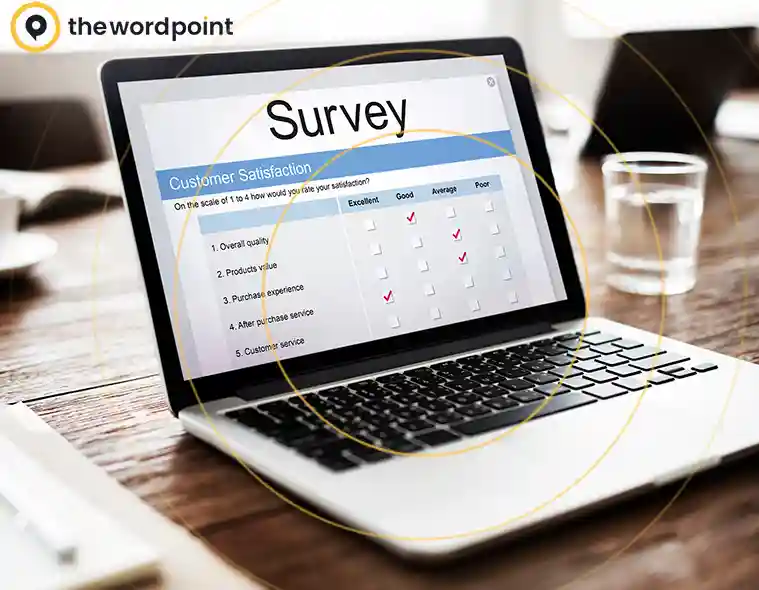

Why Survey and Questionnaire Translation Requires Specialist Expertise
Linguistic Validation and Back-Translation — The Professional Standard
What is linguistic validation? Linguistic validation (LV) is the formal process for translating measurement instruments — surveys, questionnaires, PRO measures — while preserving their ability to measure the same construct with equivalent reliability across languages. It is the professional standard applied by market research agencies compliant with ESOMAR best practices, clinical research organizations following ISPOR guidelines, and academic researchers conducting cross-cultural studies.
The standard linguistic validation process:
Forward translation. Two independent native-speaker translators produce separate translations of the source instrument. Neither sees the other's work. Using two independent translators surfaces disagreements that a single translator might not notice — places where the source is ambiguous, where multiple valid translations exist, or where a specific construction is required.
Reconciliation. An expert review panel compares the two forward translations, discusses discrepancies, and produces a single reconciled version.
Back-translation. An independent translator who has not seen the source instrument re-translates the reconciled target-language version back into English. The back-translation reveals semantic drift — concepts or nuances that were changed or lost in the forward translation process. A question about "customer loyalty" that back-translates as "customer habit" has drifted from its intended construct.
Harmonization review. The back-translation is compared against the source instrument. Significant discrepancies trigger revision of the target- language version, with the reconciliation and back-translation cycle repeated until the back-translation adequately reflects the source meaning.
Cognitive debriefing. The finalized translated instrument is tested with 5–10 representative respondents from the target population. Each respondent completes the survey, then explains in their own words what they understood each question to be asking. This reveals comprehension problems that survive all previous review stages — questions that are linguistically correct but confusing to actual respondents.
Final review and approval. Cognitive debriefing findings are reviewed; items requiring revision are updated. Final version approved for fielding.
TheWordPoint provides back-translation as a standard QA option for all market research surveys, and full linguistic validation process support for clinical PRO instruments, academic cross-cultural studies, and any project where data validity is the primary success criterion.
Survey and Research Instrument Types We Translate
Consumer satisfaction and NPS surveys. Net Promoter Score surveys ("How likely are you to recommend..."), CSAT instruments, customer effort score (CES) surveys, and post-purchase satisfaction questionnaires. Response scale adaptation for each target market. NPS benchmarks are market-specific — German consumers score lower on NPS instruments than US consumers by convention, not by preference.
Market research questionnaires. Usage and attitude (U&A) studies, brand equity and tracking surveys, advertising effectiveness studies, concept testing questionnaires, price sensitivity surveys (Van Westendorp, Gabor-Granger), pack testing surveys, and audience segmentation studies. Back-translation QA available for all quantitative market research instruments.
Opinion polls and public affairs research. Political and electoral opinion polls, public affairs and policy surveys, social research questionnaires, community needs assessments, and stakeholder sentiment studies. Statement equivalence reviewed by subject-matter experts. Demographic classification categories adapted for each market's conventions.
Employee engagement and organizational surveys. Engagement and culture surveys, 360-degree feedback instruments, manager effectiveness surveys, onboarding and exit interview questionnaires, DEI climate surveys, and pulse surveys for multilingual workforces. Adapted for each market's workplace culture conventions.
Academic and cross-cultural research questionnaires. Social science, psychology, public health, and education research instruments. Full linguistic validation process available including back-translation, cognitive debriefing protocol, and documentation for IRB/ethics committee submission.
Clinical patient-reported outcomes (PRO) and HRQoL measures patient-reported outcome instruments, health-related quality of life measures, disease-specific PRO tools, and patient experience surveys. ISPOR linguistic validation guidelines applied. Translation documentation for regulatory submission and clinical trial site activation.
Employee and customer feedback programs. Recurring pulse surveys, always-on feedback programs, post-training evaluations, and exit survey programs for ongoing multilingual measurement.
Survey Translation Prices
|
Type of Document |
Human Translation |
Machine Translation Post-editing |
|
Survey Translation from English to Spanish US/Spanish LatAm |
$0.09 |
$0.07 |
|
Survey translation from English to French Canadian* |
$0.10 |
$0.08 |
|
Survey Translation from English to Portuguese/Portuguese BR |
$0.09 |
$0.07 |
|
Survey Translation from English to Chinese* |
$0.10 |
$0.07 |
|
Survey Translation from English to Korean |
$0.11 |
$0.08 |
|
Survey Translation from English to Japanese |
$0.12 |
$0.09 |
|
Survey Translation from English to Vietnamese |
$0.09 |
$0.07 |
|
Survey Translation from English to Ukrainian* |
$0.07 |
$0.06 |
.png)
.png)

What Our Clients Say
.png)
1 reviews
"We've been using the services of TheWordPoint for our staff newsletter translation for several years and we're absolutely happy with the result."
Survey Platform Compatibility — We Work With Your Platform
Translated surveys must be imported into the platform your team uses for deployment. TheWordPoint delivers translated survey content in the exact format required:
Qualtrics — the world's most widely used enterprise survey platform. Translated surveys delivered as structured Excel spreadsheets in Qualtrics' translation workflow format, or as .QSF import files where applicable. Question text, choices, display logic labels, and matrix row/column labels all translated. Piped text variables identified and excluded from translation.
SurveyMonkey — translations delivered in a structured format matching SurveyMonkey's question and answer hierarchy. Matrix questions, grid items, and Likert scale rows/columns clearly identified and translated as sets.
Alchemer (formerly SurveyGizmo) — compatible with Alchemer's XML import format and standard structured delivery formats.
Forsta (formerly Confirmit) — translated content compatible with Forsta's multilingual survey architecture. Legacy Confirmit projects also supported.
Decipher (formerly FocusVision) — translations delivered in Decipher's standard script format for direct integration.
SurveyPlanet, Microsoft Forms, Google Forms, Typeform, LimeSurvey — delivered in platform-appropriate formats or structured Excel for manual entry.
Custom CAPI/CAWI implementations — for bespoke survey programming environments, translations delivered in the structured format agreed with your programming team.
Not on this list? Contact the account manager team — we work with any survey platform and adapt delivery format to your specific technical environment.
Key Markets and Language Pairs for Survey Research
Spanish — US Hispanic and Latin American markets. Two distinct Spanish markets requiring different approaches. US Hispanic Spanish research uses vocabulary and cultural references familiar to US-born and second- generation Hispanic respondents. Latin American Spanish research varies by country — Mexican Spanish, Colombian Spanish, and Argentine Spanish have vocabulary and register differences that affect survey comprehension. Specify US Hispanic, pan-Latin American, or country-specific translation when requesting a quote.
French Canadian. Standard French and Canadian French differ significantly in vocabulary, tone, and idiomatic expression. Quebec French specifically has additional regulatory context (Charter of the French Language) and cultural conventions. Market research for Canadian audiences requires Canadian French, not European French.
Portuguese — Brazil and European markets. Brazilian Portuguese and European Portuguese are distinct variants with substantial vocabulary and register differences. A consumer satisfaction survey translated into European Portuguese will read as foreign and formal to a Brazilian respondent. Always specify which Portuguese variant is required.
Chinese — Simplified and Traditional. Simplified Chinese for mainland China, Singapore, and Malaysia. Traditional Chinese for Taiwan, Hong Kong, and overseas Chinese communities. These are not interchangeable — both script and vocabulary differ.
Japanese and Korean. The most technically demanding language pairs for survey translation due to writing system complexity and the impact of politeness register on respondent interpretation.
A poorly translated survey can lead to misleading responses, skewed data, and ultimately, bad business decisions. Take a market research agency gathering insights in France. They might use an online service or software to translate survey to French, but if the phrasing is unnatural, respondents may misunderstand the questions. That’s why human translators are irreplaceable for business translation services. Professional marketing translators adapt marketing content, ensuring clarity and precision in the target language as well as cultural relevance for the target audience.
Meet Our Customers












How Survey Translation Works at TheWordPoint
- Define research requirements. Survey type, research objectives, target population profile, required quality level (standard, back-translation, or full linguistic validation), target platform, and fielding timeline.
- Submit survey with research brief. Upload at thewordpoint.com/business-free-quote. Include: full questionnaire file, research brief, any existing translations, platform format requirements, and any response scale documentation.
- Domain-expert native translator assigned. Matched by target language AND survey topic expertise (marketing, HR, healthcare, academic/social research, political research). Likert scale and response options reviewed for equivalence requirements before translation begins.
- Forward translation with construct equivalence focus. Translation produced with construct equivalence as the primary criterion. Response scales adapted for target-market psychometric conventions. Cultural adaptation of examples, demographic categories, and classification items flagged and resolved.
- Back-translation QA (if requested). Independent translator produces English back-translation. Comparison with source reviewed. Discrepancies resolved. Revised version produced.
- Platform-format delivery. Final translated survey delivered in your platform's required format. Cognitive debriefing protocol provided on request. Revisions incorporated based on any cognitive debriefing findings before fielding.
Reviewed and updated on August 17, 2026, by
Christakis Christodoulou,
Managing Director
Head of the Certified Translation Department
FAQ
What is linguistic validation and do I need it for my survey?
LV is the structured process (forward translation, back-translation, cognitive debriefing) that ensures a survey measures the same construct across languages. Required for academic cross-cultural research, clinical PRO instruments, and any quantitative study where cross-market data comparability is critical.
Do you provide back-translation for survey QA?
Yes. Back-translation is available as a standard QA option for any survey project. An independent translator re-translates the target version to English; comparison with the source identifies semantic drift before fielding.
How do you handle Likert scale translation?
Response options are adapted for psychometric equivalence in each target language — not literally translated. Scale intensity calibrated for target-market response conventions.
What makes human survey translation better for marketing materials?
Qualtrics, SurveyMonkey, Alchemer, Forsta, Decipher, LimeSurvey, Microsoft Forms, Google Forms, Typeform, and all others. Delivered in platform-compatible format.
Do you translate NPS surveys?
Yes. With response scale adaptation for each market's NPS conventions — NPS scores vary by market by convention, not just by customer satisfaction level.
What is cognitive debriefing?
Testing the translated survey with 5–10 representative respondents to identify questions that are confusing or culturally inappropriate in the target language, before fielding.
Do you translate employee engagement surveys?
Yes. With adaptation for each market's workplace culture conventions — not just linguistic accuracy.
Can you translate academic research questionnaires?
Yes. Including back-translation documentation suitable for IRB/ethics committee submission.
How much does survey translation cost?
$0.07–$0.12/word for human translation depending on language pair — see pricing table above. Back-translation and LV components quoted by project scope.
Why not use AI or machine translation for surveys?
AI tools translate words without understanding constructs. A question designed to measure brand loyalty may be translated in a way that measures brand familiarity — producing data that appears valid but answers a different research question. Research validity requires human expertise in both language and research methodology.
Can’t find an answer to your questions? Feel free to check our complete FAQ page, or contact us at
Are you ready to start?
Translate Now
Our Support is available round the clock to make sure that the working process is smooth and comfortable.