

-
Services
-
 Translation Services
Accurate and fast human-powered translations for global needs by top language experts to 80+ languages.
Translation Services
Accurate and fast human-powered translations for global needs by top language experts to 80+ languages. -
 Certified Translation
Certified translation for USCIS or other purposes done by translators certified by ATA, BDÜ, NAJIT.
Certified Translation
Certified translation for USCIS or other purposes done by translators certified by ATA, BDÜ, NAJIT. -
 Localization
Tailored localization solutions for the global expansion of your content into international markets.
Localization
Tailored localization solutions for the global expansion of your content into international markets. -
 Transcription Services
Our experts convert audio, video, or podcasts into text or subtitle, making your content accessible.
Transcription Services
Our experts convert audio, video, or podcasts into text or subtitle, making your content accessible. -
 MT Post-Editing
Expert post-editing services for machine-translated content that ensure fluency and excellence.
MT Post-Editing
Expert post-editing services for machine-translated content that ensure fluency and excellence. -
 DTP Service
Excellent combination of translation and DTP expertise perfectly fit for the materials intended for publication.
DTP Service
Excellent combination of translation and DTP expertise perfectly fit for the materials intended for publication. -
 E-learning translations
Elevate your e-learning content with expert translation services across diverse language audiences.
E-learning translations
Elevate your e-learning content with expert translation services across diverse language audiences. -
 Voice over
Bring your videos to life in any language with our professional voiceover translation services.
Voice over
Bring your videos to life in any language with our professional voiceover translation services.
-
- Languages
- Industries
- Business & Commerce
- Finance
- Marketing & Advertising
- Certificates, Diplomas, Licenses
- Legal
- E-learning translations
- IT & Software
- Technical
- Personal Content
- Manufacturing & Engineering
- Medicine
- Art & Literature
- Audio & Video Script
- Prices
- Blog
- About Us
- How it works
- Testimonials
- Immigration & Visa Certified Translation Use Cases
- Certified Translation Use Cases
- Document Translation Samples
- Certificate Samples
- Discounts
- Meet Our Expert Team
- FAQ
- Free Quote
- Contact Us


Film Script and Screenplay Translation Services for Cinema, Television, and Streaming
Expert translation of feature film screenplays, TV pilot scripts, documentary scripts, and dubbing adaptation scripts — by translators who are themselves writers, preserving character voice, dialogue rhythm, and cultural context for cinema, television, and streaming audiences.


Movie Script Translation
We offer high-quality video localization delivered by native-speaking translators and certified professionals, accurately adapting your content to the target language and culture. Translations are delivered in Final Draft and standard screenplay format. Available in 80+ languages.
Home > Services > Translation Services > Film Script >
Film Script Translation vs Dubbing Adaptation — Which Service Do You Need?
Film script translation covers two distinct services that are often confused — and choosing the right one for your project matters from day one.
Screenplay translation (also: script translation, reading translation). A translated screenplay is a document that reads naturally in the target language, preserves the story's dramatic integrity, and conveys character voice with authenticity. It is used for:
- Pitching to foreign studios, networks, or streaming platforms
- International film festival submission (where jury members may read scripts)
- Co-production development with foreign partners
- As the source document for subtitle production or dubbing
The translated screenplay does not need to match the timing of the original dialogue. It is evaluated as a literary work — does it read as a native script? Does the dialogue sound natural? Do the characters feel alive in the new language?
Dubbing adaptation script (also: dub script, ADR script). A dubbing adaptation script takes the translated screenplay and adapts it further for use by dubbing actors in a recording studio. Three additional constraints apply:
Lip-sync: The translated dialogue must align with the original actor's visible lip movements — especially the opening and closing of the mouth, bilabial consonants (b, p, m), and open vowel sounds — so that the dubbed performance matches the original's visible articulation.
Duration matching: Each translated line must be deliverable within approximately the same screen time as the original — if an actor speaks for 2.3 seconds, the dubbed line must also be speakable in 2.3 seconds. This often requires completely rewriting individual lines while preserving their meaning.
Character vocal rhythm: The dubbed dialogue must match the energy, pace, and rhythm of the original performance, not just its meaning.
Dubbing adaptation is a more specialized and time-intensive service than screenplay translation. TheWordPoint provides both — and advises which your project requires based on its distribution strategy.
→ Subtitling Services (for time-coded subtitle production from translated scripts) → Voice Over Services (for voiceover recording in target languages)
Solutions for Your Film Script Translation
Contact Account Manager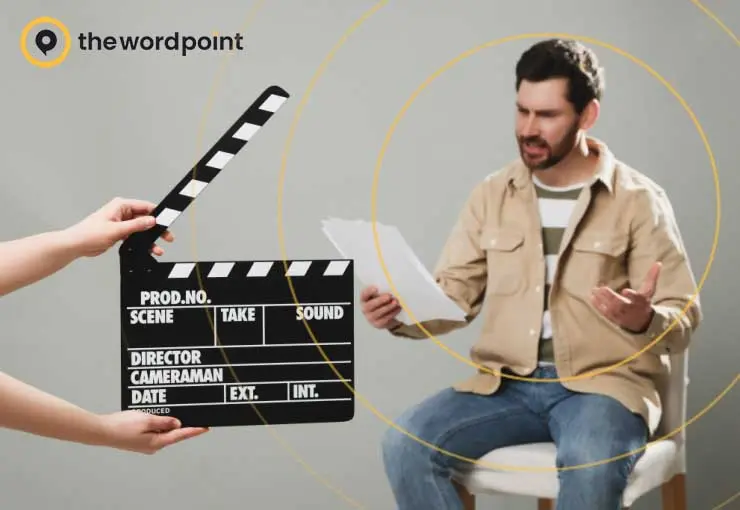

Screenplay Translation for Netflix, Amazon Prime, and Streaming Distribution
The streaming revolution has made film script translation one of the fastest-growing segments of audiovisual translation. Major platforms release content simultaneously across dozens of markets — requiring coordinated multi-language script translation at scales and timelines that theatrical distribution never demanded.
How streaming changes script translation:
Netflix Originals and international content licensing: Netflix commissions original productions in local languages and acquires rights to international content for global distribution. When Netflix licenses a foreign film or series, translated scripts are required for: evaluation by commissioning editors, as source documents for subtitle production in additional languages, and as working documents for international dubbed versions. Netflix's proprietary Language Specific Style Guides define formatting expectations, register requirements, and cultural adaptation norms for each target language market.
Pilot translation for streaming acquisitions: Streaming platforms regularly evaluate international scripts before committing to a licensing or production deal. A translated pilot script that reads naturally to a development executive in Los Angeles, London, or Seoul is often the primary evaluation document before any video is delivered. The quality of the translated pilot can directly affect whether the platform acquires the rights.
Simultaneous multi-language release: A major streaming title may require translated scripts for 30 languages simultaneously — delivered before or alongside production for downstream subtitle and dubbing production. TheWordPoint manages coordinated multi-language script translation programs for streaming distribution.
Amazon Prime Video, Apple TV+, Disney+, and regional platforms: Each major SVOD platform has its own localization style guidelines. TheWordPoint's audiovisual translators are familiar with the style guidance of all major streaming platforms for the languages they translate.
.png)
.png)

.png)
What Our Clients Say
.png)
2 reviews
"I needed an urgent video transcription, and I referred to this translation company, therefore. The accuracy and attention to detail were exceptional. The turnaround time was impressive, meeting my tight deadlines without compromising quality. If I require any similar services someday in the future, I’ll definitely get back to these guys."
Film and TV Script Types — What Each Requires in Translation
Feature film screenplays. A standard feature screenplay runs 90–120 pages (approximately 15,000–22,000 words) covering a complete dramatic story. Feature screenplay translation is the most literary of all film script translation categories — the dialogue must be elevated into the creative register of the target language's film industry. Character voice differentiation is most critical in features, where character consistency across 90+ minutes defines audience identification.
TV pilot scripts and episode scripts. Pilot scripts (typically 50–65 pages) function as the calling card for a series — they must represent the show's world, tone, and character ensemble compellingly to foreign buyers. Episode scripts in a continuing series carry the additional challenge of maintaining character voice established across previous episodes. For series with international co-production ambitions, all series bible documentation is translated alongside the pilot.
Documentary scripts and narration. Documentary scripts span from pre-production narration drafts to post-production voiceover scripts. Narration translation requires a formal, authoritative register distinct from dialogue translation. For interview-based documentaries, the translated script may also serve as the source for subtitle production. Documentary scripts for international festivals often need to be completed to tight deadlines aligned with submission windows.
Animation scripts. Animation scripts present unique translation challenges: characters often have highly stylized, exaggerated speech patterns that must be preserved in translation; the relationship between dialogue and animated character movements (mouth shapes, gesture timing) creates constraints similar to dubbing; and for children's animation specifically, vocabulary must be controlled for the target audience's age group.
Video game scripts. Video game scripts (also called "localization scripts" or "dialogue scripts" in the game industry) involve large volumes of character dialogue, NPC conversation trees, in-game narrative text, and tutorial content. Game script translation crosslinks with TheWordPoint's broader game localization service. → Game Localization
Corporate videos and branded content. Corporate video scripts — brand films, training videos, product launch videos — require a hybrid register: professional enough for business contexts but accessible and engaging enough to hold a viewer's attention. Branded content scripts for international markets also require cultural adaptation of scenarios and references.
Preserving Character Voice — The Most Important Thing in Screenplay Translation
A screenplay is not a collection of information to be conveyed — it is a collection of voices to be reproduced. Every character has a distinctive way of speaking that reveals their personality, their history, their relationship to every other character in the scene. The translation of a screenplay fails the moment a character's voice becomes generic — when every character sounds the same, or when they all sound like competent translations of English dialogue rather than people who actually speak the target language.
What makes character voice translation so demanding in film scripts:
Every major character in a screenplay has a distinct vocabulary range (limited or expansive), sentence complexity (simple declarative vs. syntactically complex), speech rhythm (staccato or flowing), relationship to formality (street vernacular vs. educated register), and characteristic expressions (words or phrasings they return to).
In translation, these characteristics must be reproduced using the sociolinguistic markers of the target language — which never map directly from English. The class markers that distinguish a working-class character from a middle-class character in English are different from those in French, German, or Japanese. An American teen's vernacular is not the same as a French teen's vernacular — and a translated teen who speaks like an adult has failed the character.
TheWordPoint's character voice methodology:
Before beginning any film script translation, the assigned translator reads the complete script to map each character's speech. A character voice document is created for all major characters, noting their vocabulary register, sentence rhythm, and characteristic patterns. This document guides the translation throughout — ensuring that a character who uses informal contractions in English uses their target-language equivalent consistently, and that a character whose dialogue is clipped and direct remains clipped and direct in translation.
Cultural Adaptation — From Jokes to References to Subtext
Cultural adaptation in film scripts is not optional — it is the difference between a translation that an international audience connects with and one they feel at a distance from.
Humor: A joke that works through English wordplay rarely survives literal translation. The translation must find the equivalent effect using the target language's own resources — its own puns, its own comic timing conventions, its own shared cultural frames. The test is not "is this a correct translation?" but "will the audience laugh at this moment?"
Cultural references: A script that references a US cultural touchpoint — a TV show, a news event, a regional custom — creates a gap for audiences who don't share that reference. Translators make case-by-case decisions: preserve the reference with minor contextualization, replace it with a culturally equivalent reference from the target culture, or omit it if it contributes only color and not meaning.
Swearing and offensive language register: Every language has its own gradient of offensive language, and the gradient does not map from English. A term that is mild vulgarity in English may be severe profanity in French, or politely comic in German. Character language must be calibrated to the target language's conventions, not literally translated.
Subtext and implication: Film dialogue routinely says one thing and means another — characters rarely express what they want directly. The translator must preserve what is explicitly said while ensuring that the subtext (what is implied, what is withheld) remains clear to a native-speaking audience with no access to the original.
Meet Our Customers













Screenplay Format, IP Rights, and Script Confidentiality
Industry-standard format delivery. Translated scripts are delivered in Final Draft (.fdx), Fountain, PDF, or Word format as specified at project start. All translated scripts maintain standard screenplay formatting conventions: scene headings (INT./EXT. — LOCATION — TIME), action lines, character names centered above dialogue, parentheticals, and transitions. A script delivered without proper formatting is not industry-standard and creates additional work for production offices — TheWordPoint delivers properly formatted scripts as a baseline.
Copyright in the translated script. The translated screenplay is a creative work in its own right. When TheWordPoint provides film script translation, copyright in the translated version is assigned to the commissioning client on completion and full payment. The translator retains no exploitation, publication, or distribution rights in the translated work. This is documented in the service agreement.
If your script is an adaptation of a copyrighted novel, play, or other underlying work, translation of the adapted screenplay may be governed by your adaptation rights agreement. Consult your entertainment attorney if you are uncertain about the rights chain before commissioning translation.
Confidentiality for unproduced scripts. An unproduced screenplay is commercially sensitive — its story, characters, and ideas have market value before the film is made. TheWordPoint applies strict confidentiality to all unproduced script projects: NDA before document access, restricted team access, no third-party sharing, no retention beyond project completion.
→ Art & Literature Translation for literary works and book-to-screen adaptation materials

How Film Script Translation Works at TheWordPoint
- Determine translation type and purpose. Reading translation for pitching/development, or dubbing adaptation for international dubbed release? Platform-specific streaming localization? Streaming style guide compliance required?
- Submit script with character and production notes. Upload at thewordpoint.com/free-quote in Final Draft, Fountain, PDF, or Word format. Include any character notes, style guides, and notes on cultural references or humor you want handled specifically.
- NDA and IP protection confirmed. Script not shared with any translator until NDA is applied. Translation copyright assigned to client on completion.
- Film translator assigned with character analysis. Native-speaker translator who is also a writer. Full script read before translation begins. Character voice document created for all major characters.
- Translation with voice and cultural adaptation. Dialogue translated preserving each character's voice. Cultural references adapted case by case. Humor and subtext reproduced for the target audience's cultural context.
- Industry-standard format delivery. Script delivered in specified format (Final Draft, PDF, Word). Screenplay formatting conventions preserved. For streaming, style guide compliance verified.
Reviewed and updated on August 26, 2026 by
Christakis Christodoulou,
Managing Director
Head of the Certified Translation Department
FAQ
What is the difference between film script translation and subtitling?
Script translation produces a translated document (the screenplay). Subtitling produces time-coded subtitle files (.SRT, .VTT) for finished video. A translated script can serve as the source for subtitle production — or the two can be combined as a workflow.
What is a dubbing adaptation script?
A dubbing adaptation script goes beyond translation to adapt dialogue for lip-sync, screen time matching, and character vocal rhythm — so dubbed actors' performances match the original visually and energetically. More specialized and time-intensive than standard screenplay translation.
What screenplay formats do you deliver in?
Final Draft (.fdx), Fountain, PDF, Microsoft Word, and other formats on request. Industry-standard formatting preserved in all translated scripts.
Do you translate scripts for streaming platforms like Netflix?
Yes — with Netflix Language Specific Style Guide compliance and equivalent style guidelines for Amazon Prime Video, Apple TV+, Disney+, and regional SVOD platforms.
How do you preserve character voice in translation?
Character voice analysis completed before translation begins. Each character's vocabulary range, register, rhythm, and characteristic patterns documented and applied consistently throughout the script.
Who owns the copyright to my translated script?
Copyright assigned to you (the client) on completion and payment. The translator retains no rights. For adaptations of underlying copyrighted works, consult your entertainment attorney regarding the rights chain.
How do you protect unproduced script confidentiality?
NDA before any script is shared. Restricted translator access. No third-party sharing. No retention beyond project completion.
Do you translate TV pilot scripts for international sales?
Yes — pilots and series bibles translated for international broadcast pitching, streaming licensing, and co-production development.
How much does screenplay translation cost?
From $0.07/word (Professional tier). A 90-minute feature screenplay (~15,000–18,000 words) from approximately $1,050. See indicative pricing table above.
How long does film script translation take?
TV episode: 3–5 business days. Feature screenplay: 7–14 business days. Dubbing adaptation: 2–3 weeks for a feature. Rush delivery available for festival deadlines.
Can’t find an answer to your questions? Feel free to check our complete FAQ page, or contact us at
Are you ready to start?
Translate Now
Our Support is available round the clock to make sure that the working process is smooth and comfortable.